An Ocean and a Day: A memoir on the turmoil of grief
September 2026
After the sudden death of her husband in 2014, novelist Hannah Richell began writing about what she was going through as a way to survive the first, unbearable years of grief. In this edited extract from her moving new memoir, An Ocean and a Day, she reflects on emerging from the darkest moments of widowhood and learning to allow the light back in…
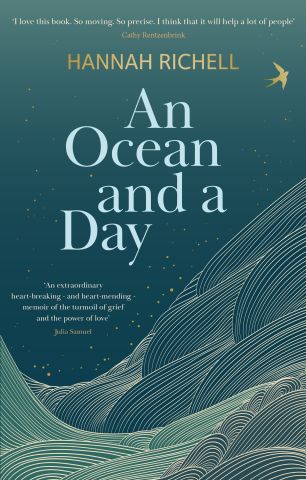
Bedford Square Publishers
Here’s what Hannah told us:
“It was July 2014 when two police officers knocked at the door of our Sydney home to tell me that my husband, Matt, had been killed in a surfing accident. We had emigrated from London just a few years earlier, built successful careers, married in a beautiful harbourside celebration and had two babies in the city that was still not-quite home.
“Like so many others whose lives have been ruptured by loss, I was plunged into a new, unwanted life. I didn’t know it was possible to be that soul-achingly lonely. The evenings when the kids were tucked-up in bed were the hardest, but gradually, as a novelist, I found myself turning to writing as an act of release.
“An Ocean and a Day is my ten-year reckoning with grief and what follows is an edited extract from the book, a memoir I hope might act as a hand reaching out to others in their own grief.”
Here’s an extract from An Ocean and a Day:
“Five years to the day since Matt’s accident, I sit in a car park in a sleepy English village waiting for a café to open its doors. It’s a soft July morning. The summer sun is low in a blue, cloudless sky. Fat bumblebees dance over dandelions and lavender. My daughter sits beside me. We have just dropped her brother at school, an early start for his primary school leavers’ ceremony. An ocean and a day away, a friend presses send on her phone and beams me a photograph from a beach in Sydney, a yellow flower balanced on a sandstone cliff overlooking the sea, a chalk ‘M’ written beside it.
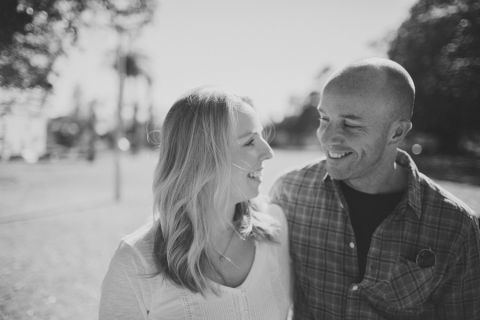
The car radio is playing a song by Daft Punk. It’s a track I remember dancing to in a club with Matt, and for the briefest, most fleeting moment, it’s as if I feel him beside me. The warmth. The love.
(c) Hannah Richell
He comes back to me now in unexpected ways. Travelling an escalator on the London Underground, I remember us together, him pressed up close against me, chin on my shoulder, arms around my waist. I see him in the green of my son’s eyes. In the dimples on my daughter’s cheeks. I see his flour-dusted hands folding pastry in the kitchen. I hear his voice in my head. That single syllable of love in the way he said my name. Han.
‘Why are you smiling, Mum?’
I squeeze my daughter’s hand. ‘Your dad liked this song.’
I’m not sure I have any other words to explain the feeling building inside of me, rising up in my throat. Grief. Love. Wonder. Gratitude. We are five years and oceans away from that moment on Tamarama Beach, and yet the echoes of it remain with us on this strange anniversary day.
The café opens. We order, then chat about beautifully unimportant things over hot chocolates before I drop her at school and return home. Key in the door. Kettle on. Chair at the kitchen table.
This is a home uninhabited by Matt. The walls and floors of this house are untouched by him. I sleep in a bed he has not slept in. Yet his presence sits lightly on our lives here. Framed pictures Matt chose hang on the children’s bedroom walls. His photo is propped on a shelf in the kitchen, housed in a wooden frame decorated by the kids. His daughter still sleeps every night with a muslin tucked in her fist, the one he bought to wrap her in as a baby. A young sweet chestnut tree grows in the garden, planted in his memory. Walking through this house, I feel the ground solid and safe beneath my feet. No longer tilted.
I make coffee and open my laptop. I don’t know what motivates me today of all days to revisit my grief writings, but it feels important to touch the past – the pain – and to remember the work that has been done. I suppose I want to measure myself against those earliest days: not only to understand just what happened but also to track how we made it from the darkest moments, when all felt lost, to this place – physical and emotional – of balance and, right now, peace.
'How long will I feel like this?’
‘How long will I feel like this?’ I’d implored my counsellors and others who had walked the road ahead of me in grief. I was desperate to know, unable to imagine ever feeling different. Tell me how to survive this.
Lucy Williams
How we survive, I have learned, is as personal to each of us as the loss we experience. There is no road map. No fast forward button to push. No quick fix. It’s a gruelling exercise of endurance, of doing the work, of submitting to the waves, of feeling the feelings and finding the anchors and points of connection. The people. The books. The music. The moments in nature. Whatever works. Like writing a novel, it simply takes as long as it takes until one day, you raise your head and realise that the smoke has cleared a little, and there, in the distance, is a path. Not the path you thought you’d be taking, but a path none the less, and with the emergence of the path comes the arrival of something else: the curiosity to step onto it.
I realise now that this is how we live with loss. Not by forgetting, or burying, or ‘moving on’. The grief will always be there. There will always be a Matt-shaped void in my life. My children will never have their father back. Time will not heal these wounds. The love and the grief will remain and shape us for the rest of our years. Yet there is healing. We repair parts of ourselves. We renew. We put out green shoots. The dark chrysalis of grief eventually cracks open and begins to let the light back in. We find the beauty and grace in life and appreciate moments of joy even while holding this loss and pain in our hearts, feeling them all the more deeply for their juxtaposition, for their fragility. There is room for it all. Just as a mother has room in her heart for all her children, I know that I have room in my heart to carry this.
The grief will never leave me. I know that it will always be a part of me, like the love it stems from. The shift comes in wanting to embrace it – to own it. And in the embrace, in pulling it close and examining it, the grief has shifted from something ugly and unthinkable to something softer, something that feels more akin to love than pain. So that when I hear a song on the radio that reminds me of Matt, I can smile now and offer up my silent thank you. How lucky we were to share his lifetime.”
For your chance to win a copy of Hannah's book, fill out the form below by Monday, 5 October (competition is open to WAY members and non members too).
This competition has now closed.
Please keep an eye out for future competitions on the WAY Website.

Your donations are always welcome.
Donate