Bringing our Blank Space campaign to Scotland
January 2026
WAY is pleased to be bringing our Blank Space campaign to Scotland – with the publication of a new Scotland-specific ‘How to Guide’ designed to support bereaved mothers navigating the registration of their baby’s birth.
The guide has been prepared on behalf of WAY by Garry Sturrock from leading UK and Scottish law firm Brodies LLP and provides practical, accessible information for women in Scotland who were pregnant but not married to their partner at the time of his death, and who find there is a blank space on their baby’s birth certificate where the father’s name should be.
The Scottish guidance is being published alongside WAY’s existing ‘How to Guide’ for England and Wales and is available here
WAY’s Chief Executive Stephanie Patrick said
"By extending the Blank Space campaign to Scotland, WAY aims to support families navigating the system today, while continuing to campaign for a simpler, fairer, less costly and more compassionate process across the UK."
Calling for a more compassionate process

Garry Sturrock, Senior Associate at Brodies LLP and an accredited specialist in family and child law, said:
“As a family law solicitor, I am frequently approached by individuals navigating some of the most challenging moments of their lives. The question of how to register a child’s birth when a parent has died before the child is born exposes a particularly complex intersection of law, procedure and personal grief.
I was motivated to contribute to this guidance because there is a clear need for accessible, accurate information to help bereaved families understand their rights and the steps required under current Scottish law. The lack of clarity in these situations can add unnecessary distress at an already difficult time.”
Reflecting on the wider campaign, he added:
“The Blank Space campaign highlights an important legal issue that affects bereaved parents and their children across the UK. It draws attention to the practical and emotional consequences of the current legal framework, particularly for unmarried parents, where the process for recognising a deceased father on a birth certificate can be lengthy and complex.
By bringing these challenges into the spotlight, the campaign helps ensure the law is subject to public scrutiny and informed discussion. Its central aim – to simplify and expedite posthumous legal recognition of unmarried fathers – is both necessary and compassionate.”
Challenging an unfair system
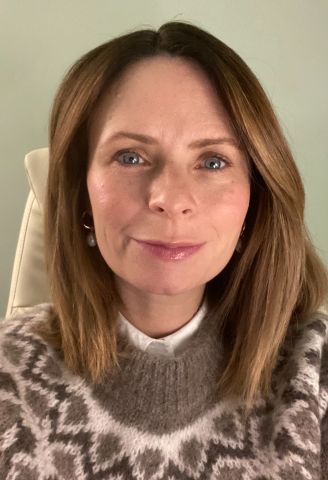
The campaign is being supported by Scottish mother and WAY member Karen, who found out she was pregnant two weeks after her fiancé Jim died. She was shocked to learn that, because she and Jim weren’t married, she wasn’t automatically able to include her fiancé’s name on their son’s birth certificate when she went to register his birth.
“If we had been married, there would have been no issue,” said Karen. “The law assumes my husband to be the father of my child. But we didn’t get time to take that final step of getting married, so we are treated differently. My son was given a certificate with a line through the space where his father’s name should be.”
After a complex two-year legal process, Karen has now finally been able to add Jim’s name to her son’s birth certificate. She had to make an application to the sheriff court for a declarator of parentage – a statement by the sheriff declaring that Jim is her son’s father.
“The hardest part was having to give evidence about the circumstances of our son’s parentage in an affidavit (a written statement),” said Karen. “My family had to get involved and give statements too. I found having to relay the intimate details of my relationship with Jim to the court very upsetting and uncomfortable. The current process is unnecessarily complex, compounds the trauma of bereavement, and feels inhumane. It piles additional emotional and financial pressure onto bereaved new mothers at what is already an immensely vulnerable time.”
“The law needs to be updated to reflect modern society, where many children are born to unmarried parents,” she added. “Cohabiting couples have long had legal recognition. The process needs to be more compassionate and straightforward, so bereaved new mothers don’t face this huge additional and unnecessary challenge.”
Get involved
WAY has been meeting with politicians and lawmakers across the UK to try and improve the situation for bereaved mothers like Karen in future.
If you’ve been affected by this injustice, do get in touch. We are keen to document how many people have been affected and we also need people who are willing to share their stories to help change the system for women facing these unfair hurdles in future.
Do get in touch if you’d like to be involved in any way via enquiries@widowedandyoung.org.uk

Your donations are always welcome.
Donate