The ultimate spiritual journey – Ruba’s Hajj story
May 2026
Eid Mubarak to all of those in the Muslim community and to our Muslim members. We know how difficult it can be to mark this occasion without your loved one. After sharing her Ramadan and Eid al Fitr story over the last few years, South London-based WAY member Ruba, 34, is now reflecting on the Muslim pilgrimage, Hajj – a journey she was fortunate enough to go on with her late husband, Aqeel, in 2017…
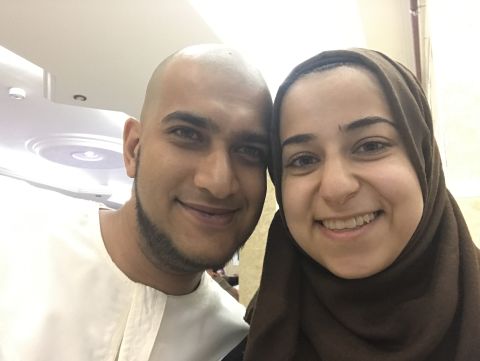
“The end of May this year marks the second festival in the Muslim calendar, Eid Al Adha or ‘Festival of Sacrifice’,” explains Ruba. “It commemorates the story of Prophet Ibrahim who was asked by Allah (God) to sacrifice his son in obedience to Allah’s command. Just before the moment of sacrifice, Prophet Ibrahim’s son was replaced with a sacrificial ram, demonstrating the ultimate mercy of Allah to those who submit to His will.”
What is Hajj?
“Today, the Eid Al Adha story is symbolic of the sacrifices Muslims make as part of their spiritual journeys. The Eid falls towards the latter part of the Islamic pilgrimage to Mecca in Saudi Arabia, known as Hajj, a core tenet of Islam which all Muslims with the physical and financial means are obligated to do at least once in their lives. In 2017, I was fortunate enough to complete Hajj with my beloved husband Aqeel, who I lost just over three years later in late 2020.
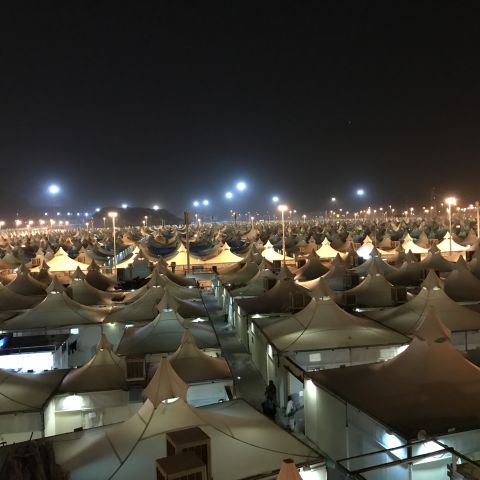
During my childhood, I was always aware of the significance of Hajj and recognised it as a journey I myself would embark on one day. I remember each of my parents going separately to manage the at home juggle – my grandmother staying behind to help take care of me and my siblings on each occasion. I viscerally felt their absence each time, having never been away from them for such a stretch of weeks before. Later, once they returned and photos were developed, I would look back in awe at the pictures they’d taken – in front of the Ka’aba (the black cube-like structure in Mecca’s main mosque around which much of the Hajj rituals centre) or in the tents in surrounding rural areas where they had camped overnight.
The Hajj journey is equal parts exhilarating and exhausting. Symbolically, it gives the opportunity for a spiritual re-birth – before you travel, you are required to seek forgiveness from those you have wronged and you must also write your will. Before commencing any rituals, you must enter a state of ‘ihram’ or purification where you shower, wear simple clothes (for men, two white towels – one for each half of the body), and remove any jewellery, watches or other adornments. When you are finally ready, you call out to Allah with the words of the ‘talbiyah’ a prayer that literally tells Allah you are here, coming in your purest state ready to submit to His will. What follows is days of spiritual rituals involving prayer and Quranic recitation, as well as lots of walking between locations and sleeping overnight in desert campsites.”
Embarking on my own Hajj journey
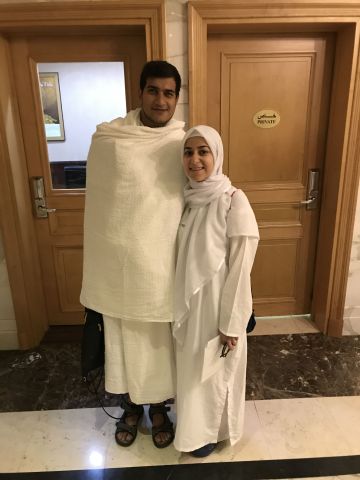
“Meeting Aqeel changed my life in so many ways, including spiritually. Faith was core to our relationship and was something we wanted to support each other’s growth through. We had always planned to go on Hajj together and were fortunate enough to do so in August 2017, almost two years after we were married.
We prepared ourselves by reading books and attending seminars to make sure we had everything we needed – from sleeping bags and comfortable walking shoes for days and nights of travelling, to Lucozade and Berocca tablets for maintaining energy and warding off sickness. Even with all the preparation we put in, the journey was hard – Hajj in 2017 fell within the blistering August heat and it was so unbelievably busy, with almost one million people from all over the globe gathering in a single place.
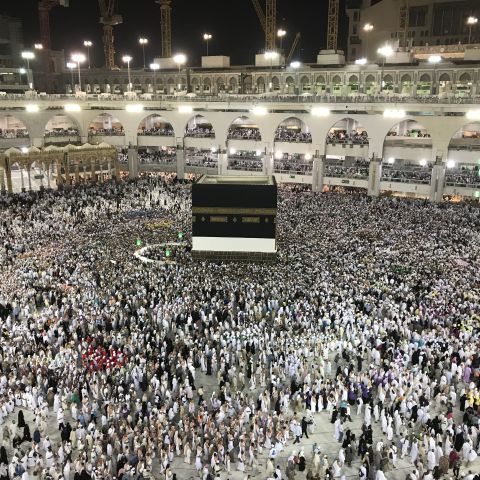
It was often difficult to disengage from the crowds and maintain stamina for the journey ahead. But travelling with Aqeel made it a million times easier. Whilst we were part of a group of about 150 and had to stay in gender-segregated rooms (abstinence a key part of the Hajj experience!), we were constantly in contact, exchanging messages searching for missing items we’d packed between bags or arranging times to meet for a tea in the communal kitchen. We were able to do most of the rituals together, supporting each other every step of the way, Aqeel often protecting me physically amidst the crowds of millions. Most importantly, we had deep and honest conversations about how hard we found things, keeping each other grounded and making sure we never lost sight of the magnitude of the journey and the privilege in being able to complete it together.”
Hajj reflections a decade later
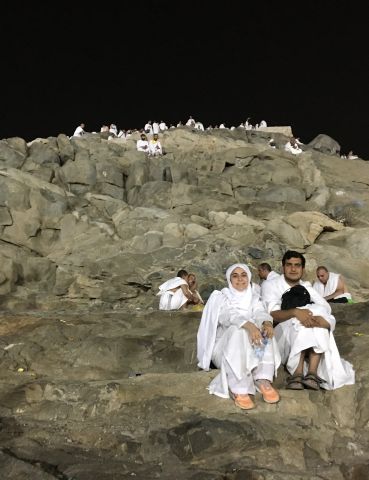
“I didn’t revisit my Hajj experience until a few years after Aqeel’s passing. The trauma of loss had driven it out of my mind, firmly into the ‘before’ era that seemed to belong to a different lifetime and a different person. But reflecting on the journey now, almost ten years later and almost six years after losing Aqeel, has been eye-opening. For the first time in years I am truly grateful, first to have even had the opportunity to complete Hajj and most of all, to have done so with Aqeel as my partner. It was a tough and testing journey and it was no small feat to have seen it through to the other side.
The reflection has taught me that, as grievers, we can and should feel like we can treasure and even celebrate our relationship milestones even without our person in this realm. The journeys we made with them are a key part of who we are today and, as painful as it can often be to recall them, they carry a continued importance in our lives in the ‘after’. I know that, if I have the privilege of going on Hajj again, Aqeel won’t be with me in person – but I will always treasure the Hajj journey we did have and remember it with a smile.”
Thank you so much to Ruba, who is a member of WAY’s Cultural Diversity Working Group, for taking the time to share her story.

Your donations are always welcome.
Donate