World Suicide Prevention Day: Changing the narrative around suicide
September 2026
To mark World Suicide Prevention Day, WAY member Lisa shares what she has learned since losing her husband Alan to suicide – and challenges some of the myths and taboos around suicide bereavement…
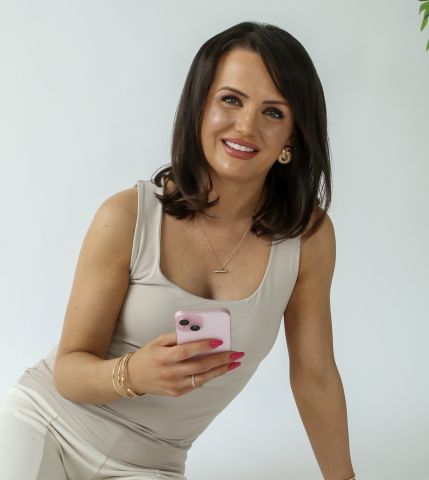
“If you had told me just over three years ago that I would be speaking openly about suicide loss, I would not have believed you. I was a dentist, a wife and a busy mum to three young children. Life was hectic, but familiar.
Then, in March 2023, my husband Alan died by suicide.
I was 31. Our children were six, four and just ten months old. In an instant, the life we had spent more than a decade building together disappeared.
Finding the words
Like many people bereaved by suicide, I found it incredibly difficult to talk about what had happened. Not because I didn’t want to, but because I simply couldn’t find the words. I felt as though no one understood.
The shock was overwhelming and I spent much of the first and second year surviving rather than living. I was later diagnosed with complex Post-Traumatic Stress (PTSD) and struggled with severe anxiety, insomnia and intrusive thoughts. The nights were often the hardest. Once my children were asleep and the distractions of the day had ended, I was left alone with my thoughts, searching for answers that didn’t exist.
Eventually, I found myself doing what so many grieving people do at three in the morning: doom scrolling. Reading stories from other widowed people. Comparing my life to other people on social media and feeling inadequate. Searching for reassurance that, somehow, I was going to survive this.
Finding others who understand
My friends and family were supportive, but grief can be an isolating experience. I had so many thoughts, emotions and questions that felt impossible to explain to people who hadn’t lived it. I was also trying to navigate widowhood at an age when very few of my peers could relate. While friends were planning weddings, family days out and future milestones with their partners, I was learning how to raise three children alone.
It wasn’t until I joined WAY Widowed and Young that things began to look a little brighter. Connecting with other young widowed people showed me that, while every loss is unique, many of the challenges of widowhood are shared. I met people who understood the loneliness, the practical realities of solo parenting and the strange feeling of watching the world move forward whilst your own world has come to a standstill.
Later, I found support from a local suicide bereavement group, which inspired me to share my story online. Hearing other people’s stories helped me realise I wasn’t alone in my thoughts and feelings. Before then, I even struggled to even say the word suicide out loud.
Finding community
After being with Alan since I was a teenager, I had no idea who I was without him.
I was suddenly the only adult in the house. The only person responsible for every decision, every school form, every sleepless night and every worry. And yet, despite feeling completely overwhelmed, there was another part of widowhood I wasn’t prepared for.
The loneliness.
Not just the loneliness of losing your spouse, but the loneliness of losing the person who knew you best. The person I messaged first when something funny happened. The person I shared every decision with. The person who carried the mental load of parenting alongside me. The person who loved our children just as much as I did.
One of the reasons I started sharing my story on Instagram and TikTok was because I struggled to find another young widow bereaved by suicide whose experience felt similar to mine. Over time, I’ve connected with hundreds of people navigating grief, widowhood and suicide loss, and that sense of community has been invaluable.
Writing a new future
I had so much I wanted to say about widowhood, grief and starting over. So one evening, after the children had gone to bed, I opened my laptop and started writing.
At first, I intended to write about my own experiences. But it quickly became too painful. Reliving every detail felt overwhelming, and I wasn’t ready to tell my story in that way. So instead I created a fictional character, Chloe, and wrote about my experiences through her.
Writing allowed me to explore feelings I couldn’t always articulate out loud. It became a form of therapy. For a few hours each evening, after the children were asleep, I would sit and write. I honestly don’t know how I found the time. Solo parenting three children is chaotic at the best of times, and there were plenty of nights I was exhausted before I even opened my laptop. But something kept pulling me back.
For the first time since Alan died, I felt passionate about something again. For months, my world had revolved around survival. School runs, appointments, therapy, grief and simply getting through each day. Writing gave me something that belonged solely to me.
Over the course of eight months, I wrote an entire novel. When I typed the final words, I cried. Not because I thought it was perfect. Far from it. But because it was proof that I was still capable of creating something.
Widowhood had taken so much from me. My husband. My future plans. My confidence. My sense of safety. My career as a dentist. But somehow, through all of that, I had written a book. I am now pitching my novel to literary agents in the hope of securing a publishing deal.
Three years ago, I couldn’t imagine a future. Today, I’m writing one and that feels like a pretty good place to start…”
Lisa is a nominee for our 2026 Helen Bailey Award and documents her story on Instagram and TikTok @the_widowdiaries

Your donations are always welcome.
Donate