Young people helping to change the narrative this Suicide Prevention Month
September 2026
Suicide Prevention Month is an opportunity to have open conversations about suicide and its impact. For people who have been bereaved by suicide though, the thoughts, questions and feelings that follow a death are not confined to one day.
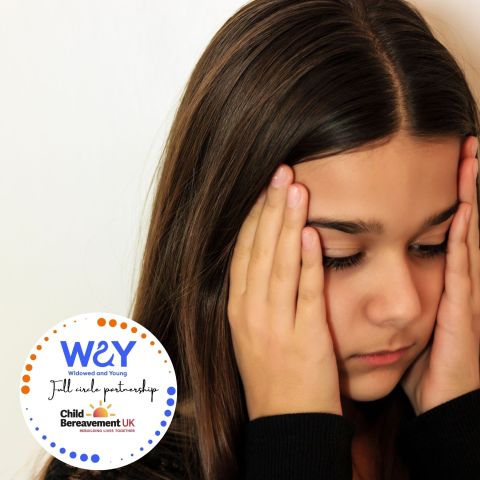
Bereavement by suicide can bring many different and sometimes conflicting emotions. There is no single way to experience it and no one person’s story can speak for everybody.
To mark Suicide Prevention Month, our friends at Child Bereavement UK invited the young people they support to share some of their own experiences. In their words, they reflect on what has helped them, things they wish other people understood and how they have learned to live alongside their grief.
Daisy’s story
“When you’re the first child in a classroom to lose a parent, you are bound to feel different. When that parent dies of suicide, that feeling can become deeply isolating. The stigma surrounding suicide is still something we are yet to fully erase from society, particularly from those left behind to grieve.
Children who lose a parent to suicide are also three times more likely to die by suicide themselves – a statistic that highlights just how important it is to ensure young people feel supported, understood and able to talk about their experiences.
My dad took his own life after a long battle with depression when I was 12. That was nine years ago. At the time, I was angry and confused. I felt like he had made a choice to leave me behind. I knew he loved me, so why did he leave? Why did he not get help? Why couldn’t he stay? These were questions no one could answer, and at 12, I wasn’t old enough to understand that sometimes there aren’t straightforward answers.
As I got older, my family was introduced to WAY Widowed and Young, where I met other young people who had also lost their dads. It was an incredible turning point in my life, and some of those people are now my closest friends. Yet I initially I found myself comparing my grief to theirs. Some had lost their dads to heart attacks or other illnesses – circumstances that felt completely outside their control. I felt awkward explaining how my dad had died, worried that people would see his death differently because he had taken his own life.
I remember thinking that they had something I didn’t – an explanation. Their loss had a clear medical reason. With suicide, I felt there were more questions than answers. I now understand that those thoughts were shaped by the confusion and stigma surrounding suicide. For a long time, I carried a sense of shame and guilt I didn’t know how to articulate. Suicide doesn’t just leave behind grief; it can leave behind unanswered questions and a complicated relationship with the person you have lost.
Through years of counselling, an interest in psychology, and studying the history of mental health, I have developed a much greater understanding of depression and suicide. I can now look back at my dad’s death with far more compassion – both for him and for the 12-year-old girl who struggled to understand it.
For a long time, I felt different because my dad died by suicide. Changing the narrative, for me, means challenging the idea that it is something to be ashamed or hidden. It means recognising that behind every statistic is a person, a family and a story – and that those left behind deserve the same compassion and understanding as anyone experiencing bereavement.
My dad’s death will always be part of my story, but it does not have to define it. If sharing my experience can help another young person realise that they are not alone or feel less ashamed of the way their loved one died, then I hope I can turn something painful into something that helps change the narrative.”
Charlotte’s story
“I lost my mum to suicide when I was 19. She was one of the ‘least likely’ people to take their own life, not really displaying signs of mental illness until being in her late 50s.
She had a great life on paper – a loving family and home life etc, which proves how much mental health doesn't discriminate. I hear people refer to it as a selfish thing to do and speaking ill of people who would leave a family behind, which can be really hard to hear as a survivor.
Their illness shouldn’t define the life they did live and they shouldn’t be judged as a person for developing an illness that they couldn’t survive. There’s no ‘type’ of person that takes their own life.
It is also something that can still be difficult to talk about a long time after it has happened. Six years after my mum died, I still find it hard to talk about.
It can be difficult when people around you who weren’t as close to your relative move on, as to be expected, but your grief still forms a huge part of your daily life.”
Where to get support
Child Bereavement UK is a charity that supports grieving children and young people, and parents bereaved of a baby or child, to find hope and rebuild their lives.
If you’re an adult supporting a bereaved child or young person, you can speak directly to a bereavement specialist on 0800 02 888 40, email ask@childbereavementuk.org, use the live chat on their website childbereavementuk.org or text/WhatsApp on 07418 341 800 (all available Monday to Friday, 8am-8pm).

Your donations are always welcome.
Donate