Celia’s story: Mental health, grief and raising two boys after being widowed to suicide
October 2026
WAY Widowed and Young member Celia shares how she has coped with her husband’s death by suicide and raising two young boys in the aftermath
“I’m Celia. I am a solo mum raising two boys after my husband, Jim, took his own life in June 2024. Jim’s death was deeply traumatic for us all. Our youngest son, who was nine at the time, found his dad. Our eldest, then 11, witnessed the immediate aftermath. From a child’s perspective, that is unimaginable. It has added profound layers of trauma to the grief we are still living with.
Children grieve differently at different ages. My boys are both deeply affected, but they express it in very different ways. A little over two years on, my eldest is struggling with anxiety and finding school difficult. This kind of loss does not stay in the past. It shows up in ordinary moments, making even simple parts of life hard.
Widowed parenting is not something you can prepare for. Jim worked away a lot, so I was used to doing much of the parenting single-handedly, but this is entirely different. Overnight, you become everything: the emotional anchor, decision-maker, taxi driver, comforter, good cop and bad cop. There is no one beside you when you are overwhelmed.
You are grieving deeply, but you still have to keep going: packing lunches, filling in school forms, managing finances, cooking meals and getting through bedtime. In grief, even the smallest tasks can feel enormous.
People sometimes compare solo parenting after bereavement with single parenting after separation or divorce. I have experienced both, and they are very different. My version of solo parenting is shaped by trauma, loss and ongoing crisis. Alongside that is the quiet, devastating truth that no one will ever love my boys in the way their dad did.
Constant balancing act
What people do not always see is the constant balancing act. You are carrying your own heartbreak while trying to protect your children from the full weight of it. You are supporting their grief, which can look like anger, withdrawal or sudden affection, while also trying to manage your own mental health.
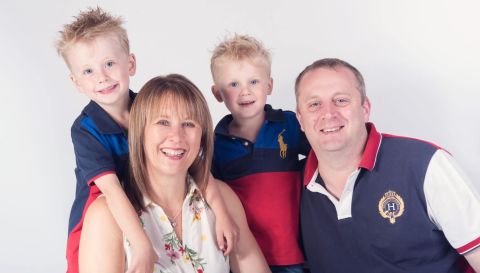
Three months after Jim died, I had a breakdown and was admitted to a mental health hospital for five weeks. My boys then faced the fear that they might lose me too. Since then, anxiety has become part of my life in a way I had never experienced before. That has also brought guilt, because Jim struggled with anxiety and I never truly understood how powerful and overwhelming it could be.
This is a life we did not choose. It is frightening, uncertain and often feels like a constant tension between honouring the past and somehow moving forward. Triggers can be unpredictable: noise, lack of sleep, stress. When I struggle, my boys struggle too.
The reality of support
Since Jim’s death, I have had to contact crisis teams for my children. We have been referred to Child and Adolescent Mental Health Services (CAMHS) and received support through social workers and my own community psychiatric nurse. Navigating these systems is not easy, and services do not always meet the level of need.
Support often falls away after the funeral. People have their own lives and may assume you are coping because they see you taking the boys to school, walking the dog, smiling or looking as though you are functioning. But outward appearances can be misleading. Friendships can evaporate because people do not know what to say or how to help, and social situations that once felt normal can become isolating.
At the same time, some connections have become unexpectedly meaningful. I have incredible friends and family, and people have come back into our lives because they wanted to help. That has been heartwarming.
Finding connection
There is a loneliness to this life that is hard to explain, though. Even surrounded by people, you can feel completely alone in the decisions you are making and the weight you are carrying. You miss having someone to share the load with, someone to reassure you when your child has had a meltdown. Sometimes I talk to my dogs, who seem to know when I am struggling.
And yet, I did not get through the darkest days alone. My friends and family carried me when I could not carry myself. They sat with me, helped practically, took my boys out to give me a break and reminded me that I was not on my own. We have a small but vital support network who are there even on the snotty, tearful, heartbreaking days.
My children have seen my vulnerability because I could not hide it. They have seen shock, guilt and grief overwhelm me. But they have also learned that it is okay to show emotion, that you can hit rock bottom and slowly find a way back. Long gone are the days of “man up”. Manning up did not help Jim; it stopped him being able to show or share his emotions.
For those at the beginning
If you are earlier in this journey than me, please know that while it does not suddenly get better or easier, it does become more manageable. I found that hard to believe at the beginning, but the intensity softens, even if only slightly at first. One day you may realise you have got through something that once would have completely floored you. That matters. There really is hope.
For now, take it one minute, one hour or one day at a time. Lower the bar. Accept help when it is offered, even if it feels uncomfortable. Let people wash up, clean or make you tea. Shout, cry and talk about how you feel, whether to a friend, a professional, yourself or even the dog. You do not have to carry it all silently.
I found that connecting with other parents widowed by suicide really helped me – there is something powerful in listening and talking to other people who truly understand. I joined a local Survivors of Bereavement by Suicide (SOBs) group and WAY Widowed and Young’s Zoom meet ups for people bereaved to suicide. Sometimes I shared my feelings and other times I just listened and cried. Those sessions helped me recognise that I was slowly inching forwards in my grief…
Still showing up
In all of this, there is also a fierce kind of love and resilience that I’ve noticed about us… we’ve somehow kept going, I kept choosing my children and they kept choosing me, even on the hardest days we’ve managed to keep breathing!
I choose to speak openly about the reality that suicide leaves behind, what our grief is like, the trauma it saddled us with and our day-to-day struggles. I want to help break down the stigma of suicide, death, grief and trauma in a meaningful way – it should be talked about, it’s part of life. Yes, it’s the ugly side of life and it’s not always easy reading – but, it’s daily life for us.
If my openness and honesty helps just one person reach out, choose help, feel understood or spares another family this devastation, then me giving my voice to it has had a purpose.”

Your donations are always welcome.
Donate