Day of Reflection: An exclusive extract from WAY Trustee’s memoir
March 2026
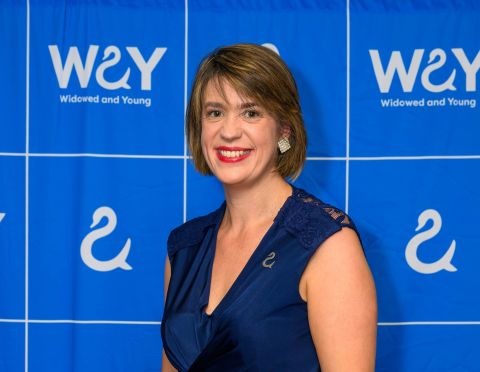
To mark this Day of Reflection, WAY Trustee Emma Charlesworth has been reflecting on the events of 2020, as she does every year. As the words coronavirus and COVID-19 started to become a part of our everyday lives, Emma could never have envisaged that – by the end of April 2020 – she would be a widow at the age of 39 and a solo parent to her then 10-year-old daughter, Rebekah.
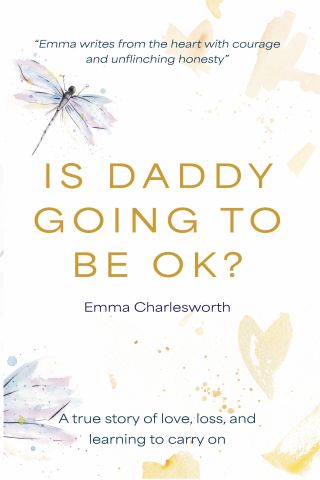
Emma tells us: “The Day of Reflection gives me the opportunity to write a piece about that time, but over the last two years, I’ve been reflecting and writing about that time regularly so that I can tell our story. I don’t think there is anything more I could say that depicts what it was like for those living through that time with a loved one in hospital than to share an extract from my book, Is Daddy Going to Be OK? It’s simply the best way I have to show what life was really like while honouring my late husband and all those who were lost during the pandemic in the most unprecedented of circumstances.”
Below is an exclusive extract from Emma’s book, which recalls a conversation she had a week before Charlie died. Under normal circumstances, it’s a conversation that would have happened face to face. It's a stark reminder of how different the world was then and the difficult conversations both the NHS and those with loved ones in hospital had to have six years ago…
“We woke up on the morning of 12th of April not really expecting anything from the day. It was Easter Sunday and so Easter eggs were delivered to our driveway. A day of eating chocolate lay ahead of us. I busied myself in the garden again, sorting out the pond and doing some weeding. I started to do some forward-thinking, building on my thoughts of the previous night. I messaged Rob, a mutual friend of ours (whom Charlie had managed Sporting Sittingbourne FC, a Sunday League team, with), to ask him whether, once this was all over, we could organise a charity football game, with donations to be made to Medway ICU. Rob responded that it was something the lads had already been talking about, so absolutely two hundred percent. This in itself made me laugh. Charlie had a massive issue with anyone citing anything more than one hundred percent as that is the most you can get. When watching The X Factor and the judges saying “one thousand percent yes,” he would more often than not shout at the TV and state that was ludicrous because one hundred percent was the maximum.
Overall, this day was feeling like a very non-descript day. It was feeling very much like the previous day. Just going through the motions, doing chores, eating chocolate, and watching TV. I didn’t send any messages to anyone. I just focused on doing little things to keep us both occupied. Just before Rebekah was about to go to bed, my phone rang with a call from an unknown number. This meant it was the hospital. I was relieved; I hadn’t expected an update that day and so the fact I was getting one must mean that there was some progress and positive news, based on the small slivers of hope I’d been getting the previous day. I answered the phone and walked into a different room, away from Rebekah. I was armed with my notepad and pen that I’d been using to write down the updates so that when I spoke to Sarah I was able to tell her exactly what had been said.
The tone of the consultant who spoke to me that day was very flat. I’d been speaking with two consultants throughout the week, and they both had different bedside manners over the phone. With one, I would always come off the phone feeling positive and as though things were going to be OK. With the other I would always come off the phone feeling slightly dejected and fearing the worst. This was just the way it was. Everyone has a different way of delivering news. When I heard a female voice, I knew that I was going to come off the call feeling dejected. But hey-ho, this was all par for the course.
I started making notes and listening to what she was saying. It was very factual and to the point. He wasn’t responding in the way they had expected him to. They’d have liked him to show real progress given how long he’d now been under their care. Charlie was being discussed in review meetings, but they were running out of things to try for him. Difficult decisions were going to have to be made about his continued treatment. More and more people were being admitted. Beds were needed in the ICU. This wasn’t a slight on him, it was simply the facts being laid bare before me. She asked me if I understood just how seriously ill he was. Whether I understood the severity of the situation and what the likely outcome might be. I started crying at this point. I didn’t want to be having this conversation. I wanted positivity and hope, not realism. And then she uttered a question which still haunts me to this day:
“Has anyone ever told you to prepare for your husband to never come home?”

Your donations are always welcome.
Donate