Grief and nutrition at Christmas: Sabine’s advice
November 2026
Drawing on her own experience of loss, WAY volunteer and qualified nutritionist Sabine Horner shares gentle, practical ideas for making the festive season more manageable – from simple, nourishing meals to approaching Christmas one small step at a time. Sabine is running a series of webinars and cooking workshops for WAY members over the next few months…
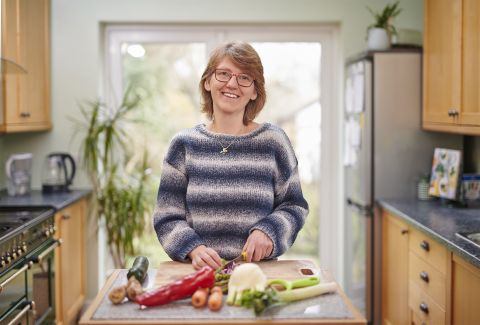
“Christmas can feel like a minefield when you’re grieving. A few months after Kevin died, I found myself in a garden centre surrounded by twinkling lights and cheerful shoppers, desperate to escape. Everything around me seemed to belong to a different reality. Back at home, even cooking a simple meal felt overwhelming.
You may recognise that feeling: having little energy, no motivation to cook and struggling to find the enthusiasm to plan meals or face the food shop. My bereavement counsellor described grief as turning us into ‘energy vampires’, and I soon understood what she meant. What I hadn’t realised was how deeply grief would affect me, not only emotionally but physically, too.
As Christmas approaches, familiar traditions, shared meals and family gatherings can bring painful reminders of the person who is missing. Perhaps this year, the most helpful thing you can do is give yourself permission to approach Christmas – and Christmas meals – differently.
Why the festive season makes everything harder
Even before the holidays, many of us are running on empty. Poor sleep, exhaustion, anxiety and low mood can become daily companions.
Then Christmas piles on more pressure: emotional triggers, social expectations, late dinners, disrupted routines and an abundance of rich foods and sweet treats that promise comfort but often leave us more depleted.
When emotional stress is already disrupting our digestion and appetite, Christmas adds another layer of overwhelm.
And this is where food – or the lack of it – starts to matter far more than most people realise.
The blood sugar grief spiral
During a trip to Italy – just a year after Kevin died – I discovered something nobody tells you: what and when you eat can influence how well you cope with the physical and emotional demands of grief.
I call it the grief and sugar rollercoaster – when stress and irregular meals send your blood sugar soaring and crashing, pulling your mood, energy and emotions with it.
I learned this the hard way. Limited fibre-rich breakfast options and odd meal times sent my blood sugar spiralling. Combined with my already fragile emotional state, it tipped me over the edge. One morning, I completely lost it – and almost lost some friends with it who didn’t understand what was happening.
That’s why I want you to know: when grief is already throwing you around emotionally, the last thing you need is your blood sugar doing the same.
Practical strategies for navigating Christmas
My book, Nourishing Through Loss: A Gentle Holiday Guide, grew out of my own experiences and from seeing how many people dread the festive season after losing their partner. It’s about making the holidays a bit more manageable when you’re barely coping.
Some of the simplest recipes can be the most helpful:
- My ‘magic’ soup – a nourishing lifesaver for travel or low-energy days.
- Sparkly stir-fry – a colourful, adaptable meal to brighten up days when everything feels grey.
- Nourishing desserts – genuine comfort without the sugar chaos
- Spiced mulled wine – truly medicinal, thanks to digestive spices
- Energy balls – quick nourishment for emergencies
Every recipe follows this ‘magic trio’: vegetables (or fruit), protein and healthy fats – keeping your blood sugar steady so you don’t need coffee mid-afternoon or a snack just before bed.
Beyond recipes, the book also shows you how to create ‘eating anchors’ when life feels unpredictable, let go of perfection with the 80:20 approach, set healthy boundaries at social gatherings, reset your digestion when it feels off and handle travel or family stays without being caught off guard – like I was in Italy.
Nourishing Through Grief: Practical cooking sessions for WAY members
Knowing what to eat is only half the challenge. The other half is knowing how to prepare something nourishing when you have very little energy, confidence or motivation.
That’s why I’ve developed a series of practical cooking workshops and wellbeing sessions specifically for WAY members, called Nourishing Through Grief.
The 16 December workshop, A Grief-Friendly Christmas, explores simple festive food that doesn’t require hours in the kitchen, with ideas for cooking for one or several people.
The wider series continues into March, exploring practical survival meals, from colourful stir-fries and comforting risottos to versatile fish or lentil burgers. The aim is to build confidence and show that nourishing meals don’t need to be complicated. One basic recipe can be adapted in many different ways.
Understanding what grief does to your body
Food is important, but nutrition is only one part of looking after yourself. Grief can affect many interconnected systems in the body, which is why I’ve also developed six educational webinars for WAY members.
The sessions explore topics such as persistent fatigue, anxiety, appetite and digestion, self-care, sleep, and the overlap between grief and (peri-)menopause.
Each session combines explanations of the underlying processes with practical strategies to support your wellbeing.
All cooking workshops and webinars will be recorded and made available through the Members Hub, so you can watch them whenever it suits you or return to them whenever you need a reminder.
Give yourself permission to do things differently
Christmas while grieving takes extraordinary effort, but you don’t have to white-knuckle your way through.
Give yourself a break. Allow yourself to do things differently this Christmas. Even one warm, balanced meal, one deep breath before eating, or swapping just one ingredient for a more nourishing option can change how you experience the holiday season.
This Christmas, perhaps the greatest gift you can give yourself is permission to slow down, let go of expectations and take care of yourself, one small step at a time.

Your donations are always welcome.
Donate